




Lost Measurement Data
Customer sizes scribbled on paper get misfiled so remakes and poor fit follow.
Fit RiskKeep measurements, work orders, and delivery dates in one audit-ready system. echoBitz builds Odoo tailoring solutions with AI Agents that flag orders at risk of missing their delivery date.
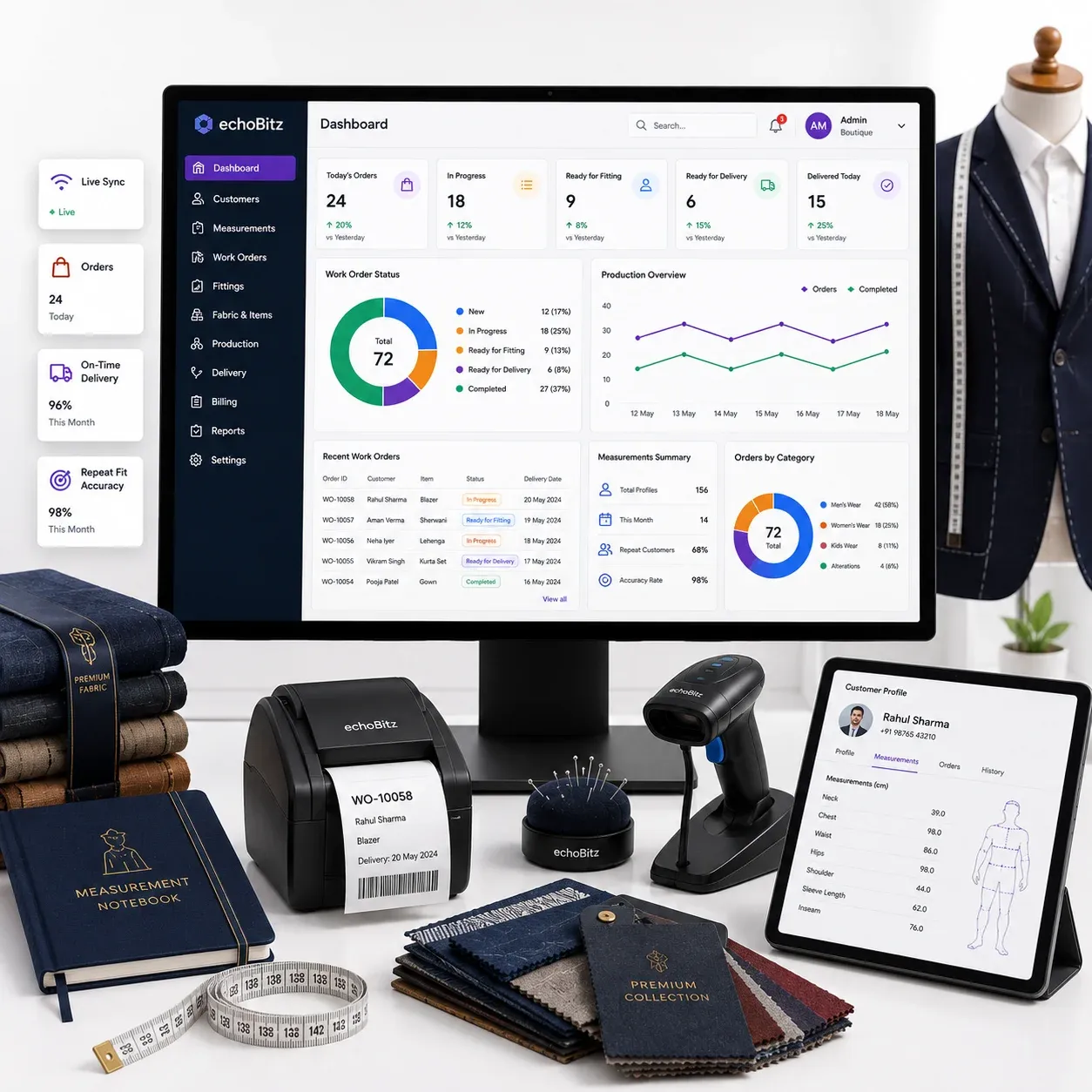
Notebook measurements, verbal style notes, and wall-calendar delivery promises hide fitting errors, missed deadlines, and alteration backlogs across busy tailoring floors.
Customer sizes scribbled on paper get misfiled so remakes and poor fit follow.
Fit RiskFabric, lapel, and lining choices discussed verbally never reach the cutting table.
Rework RiskPromised dates tracked on whiteboards so VIP orders miss events and weddings.
Reputation RiskQuick alteration jobs lack queue priority and linkage to customer history.
Throughput RiskModernize bespoke and ready-to-alter workflows with an integrated system that connects measurements, style/fabric specs, work orders, fittings, delivery dates, and alteration jobs in one Odoo flow.
Profiles Managed
Reusable Data Fit AccuracyRemake Rate
−45% vs. Paper MeasuresOn-Time Delivery
+30% Milestone trackingAtelier Insights
Live Analytics Orders, fittings, backlogA connected tailoring stack for measurement profiles, garment specs, work orders, fittings, delivery scheduling, and alteration queues.
Customer sizes, posture notes, and revision history per garment type.
Benefit: Repeatable FitSilhouette, fabric SKU, lining, buttons, and trim specifications.
Benefit: Clear Production BriefCutting, stitching, finishing stages with tailor assignments.
Benefit: Controlled ProductionTrial appointments, adjustment notes, and approval checkpoints.
Benefit: Fewer Surprises at HandoverPromised dates, urgency flags, and event-linked deadlines.
Benefit: Reliable CommitmentsQuick jobs, priority queue, and customer garment history.
Benefit: Faster TurnaroundMove from measurement notebooks and verbal style briefs to a unified tailoring ecosystem designed for fit accuracy, production clarity, and on-time delivery.
Paper measure cards, fabric swatch piles, and handwritten delivery chalkboards defined the traditional tailoring workshop landscape.
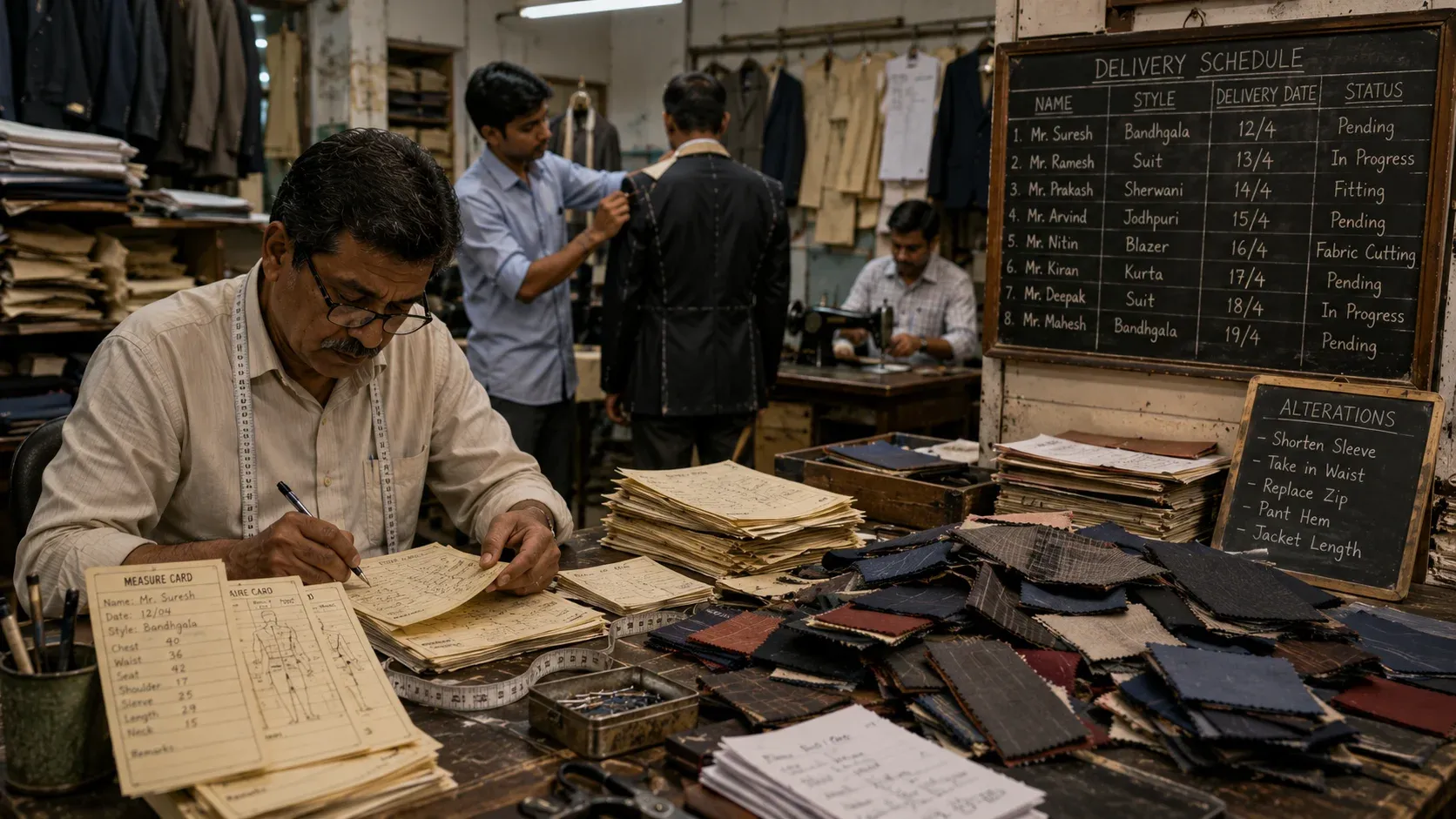
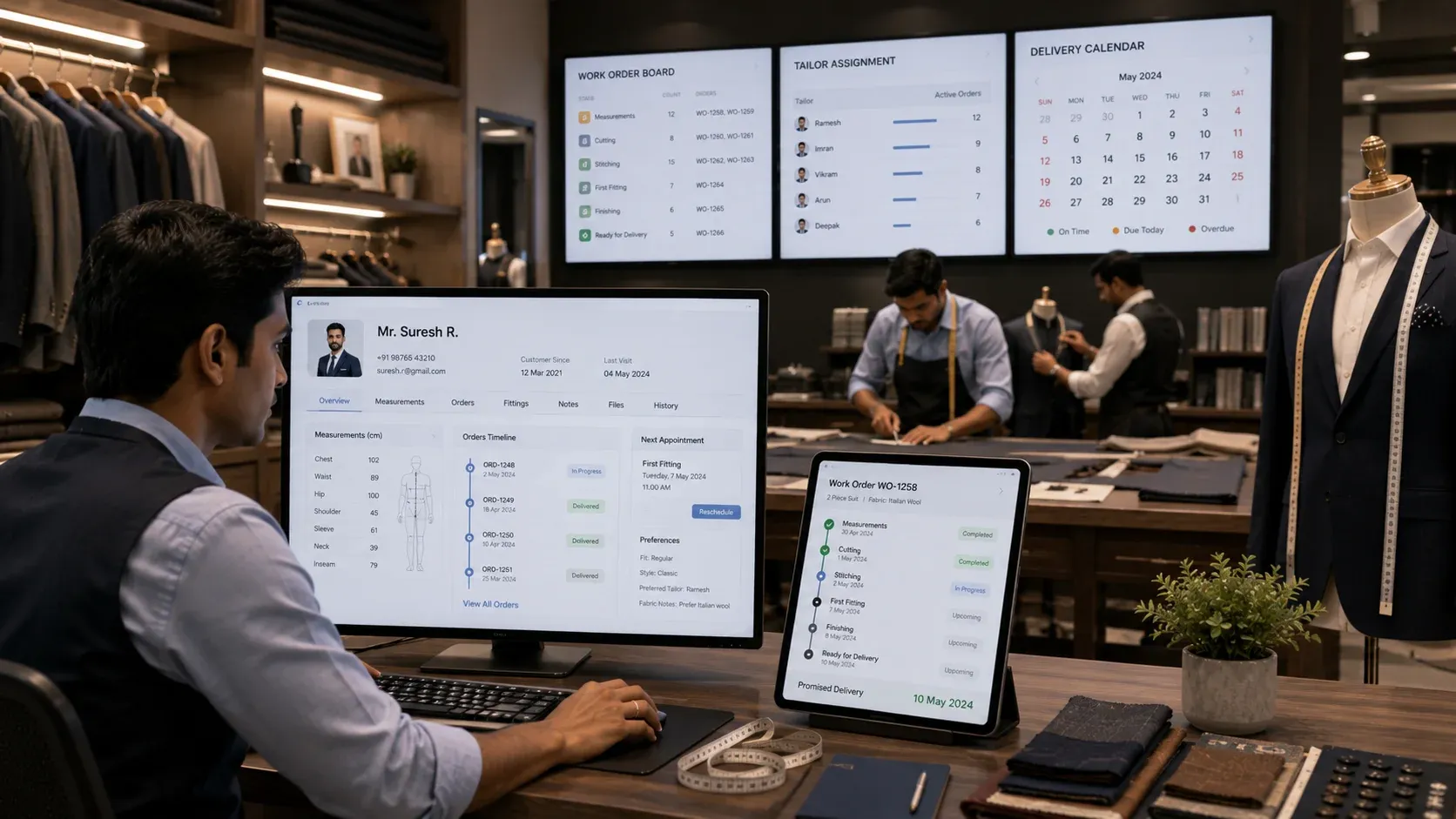
Transitioning to tailoring-first Odoo meant precision at every touchpoint from first measure to final fitting to customer handover.
Run ateliers and alteration chains with workflows that match how garments are measured, specified, and produced. From profile templates and fabric catalogs to fitting checkpoints and alteration SLAs, we configure Odoo to your tailoring house.
See backlog, remake rates, fitting cycles, and fabric usage by tailor and branch.
Native Odoo links to accounting, inventory, and CRM for a single tailoring truth.
Support from specialists who understand bespoke deadlines, fittings, and peak-season weddings.
echoBitz bridges client consultation and workshop production so measurements, orders, fittings, and finance data stay aligned.
Profiles, style history, and garment specs with photo gallery linkage.
Deposits, invoices, and alteration fees post cleanly into Odoo ledgers.
Track throughput, remake cost, and margin by garment type.
VIP lists, event dates, and communication for repeat bespoke work.
Cutters, sewers, and finishers connected to every open order.
Reference photos and past garments tied to measurement profiles.
Have questions about measurements, work orders, fittings, delivery dates, alterations, or Odoo tailoring setup? Here is what tailoring teams usually ask before starting.
Talk to a Tailoring ExpertIt is an Odoo-based solution for measurement profiles, style and fabric selection, work orders, fittings, delivery dates, alteration jobs, and customer gallery in one connected workflow.
Yes. Customer sizes and revision history can be stored per garment type so repeat orders and alterations start from trusted data.
Yes. We configure trial appointments, adjustment notes, and approval checkpoints so production reflects agreed changes.
Yes. Quick alterations can run on priority queues while staying linked to customer history and billing.
Yes. Fabric stock, deposits, and final invoices can feed inventory and accounting without duplicate entry.
A single-atelier setup can start after discovery. Multi-branch production, custom garment types, legacy client migration, and workshop role rules may need additional sprints.