



Catalog Fragmentation
Title metadata and copy locations live in separate lists so staff cannot trust shelf availability.
Discovery RiskKeep every catalog record, loan, and fine in one audit-ready system. echoBitz builds Odoo library solutions with AI Agents that flag overdue items and recommend catalog reorders automatically.
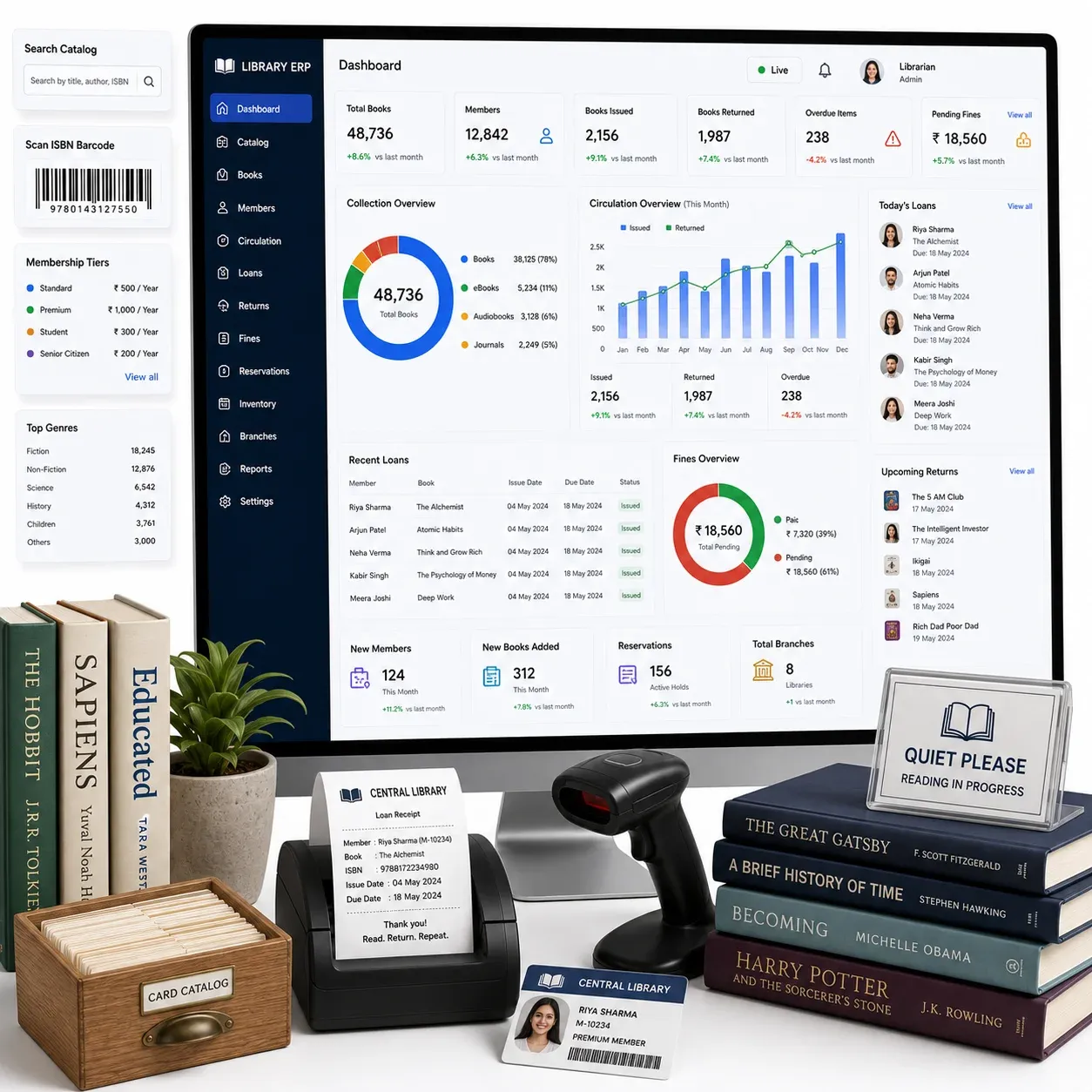
Manual issue registers, shelf-only copy tracking, and spreadsheet fine calculations hide lost volumes, unfair penalties, and reservation queues across multi-branch collections.
Title metadata and copy locations live in separate lists so staff cannot trust shelf availability.
Discovery RiskHandwritten lend/return slips miss due dates and renewal limits.
Collection RiskOverdue rules applied inconsistently frustrate members and weaken policy trust.
Policy RiskCopies moved between branches without updates leave members waiting on ghost reservations.
Inventory RiskModernize library services with an integrated system that connects catalog/ISBN records, membership tiers, lending, returns, fines, reservations, and multi-branch inventory in one Odoo flow.
Titles Cataloged
Rich Metadata Multi-BranchCirculation Errors
−55% vs. Paper RegistersReservation Fill
Faster Queue visibilityLibrary Insights
Live Analytics Loans, fines, turnoverA connected library stack for catalog administration, circulation, membership tiers, fines, reservations, and branch inventory control.
Titles, authors, editions, subjects, and copy barcodes.
Benefit: Trustworthy DiscoveryIssue, renew, return, and hold workflows with due-date rules.
Benefit: Accurate LendingPatron categories, loan limits, renewal caps, and fees.
Benefit: Fair Policy ApplicationAutomated fine rules, waivers, and payment tracking.
Benefit: Transparent PenaltiesHold queues, pickup alerts, and cross-branch fulfillment.
Benefit: Shorter Wait TimesCopy location, transfers, and shelf status by branch.
Benefit: Unified Collection ViewMove from card catalogs and fine notebooks to a unified library ecosystem designed for discovery, fair circulation, and multi-branch collection integrity.
Paper circulation registers, manual fine tallies, and branch transfer notes defined the traditional library operations landscape.

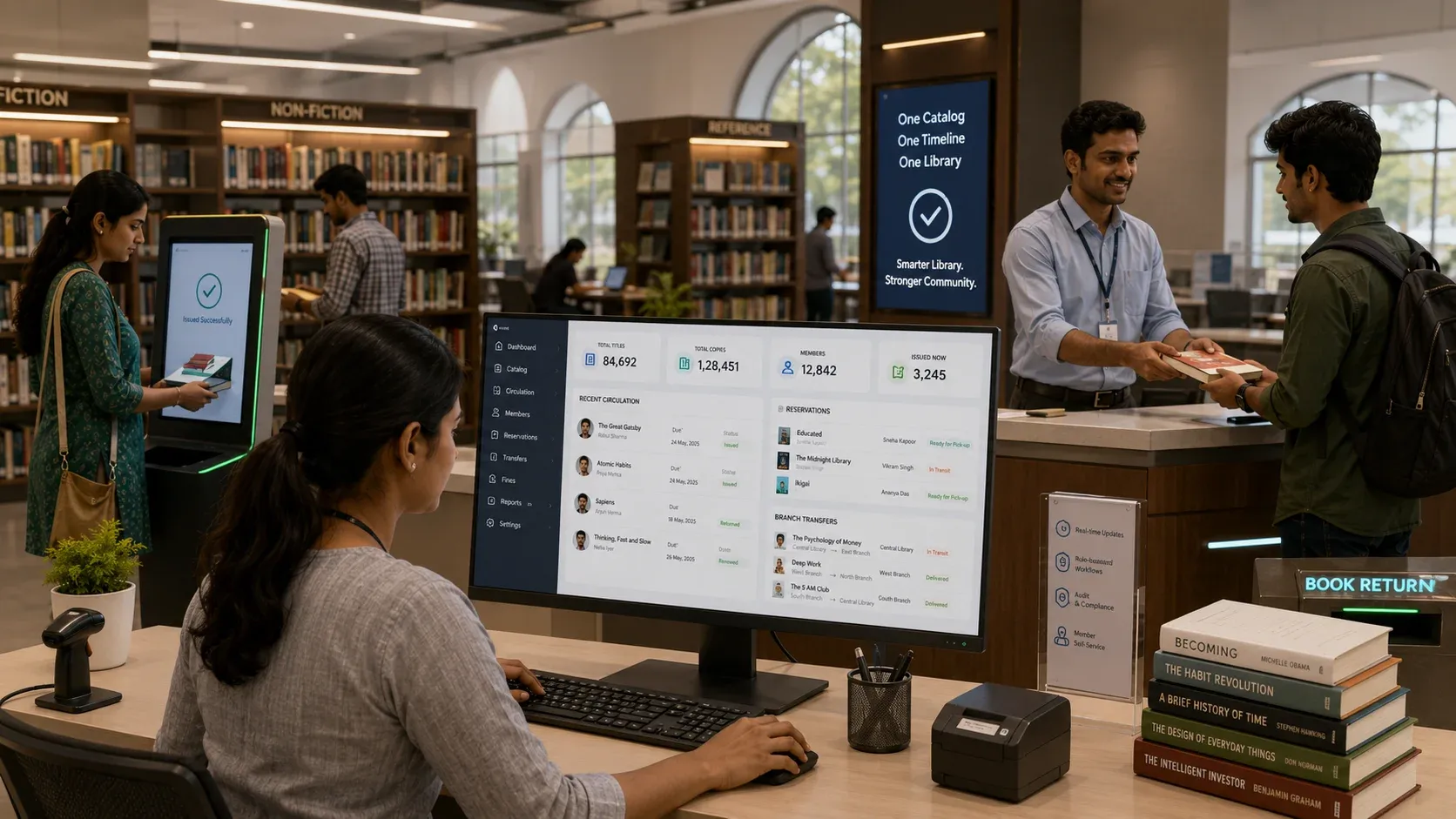
Transitioning to library-first Odoo meant precision at every touchpoint from cataloging to issue to fine settlement.
Run single branches and federated systems with workflows that match how collections are cataloged, lent, and maintained. From ISBN schemas and membership tiers to fine policies and inter-branch transfers, we configure Odoo to your library network.
See loan turnover, fine revenue, reservation queues, and popular titles by branch and tier.
Native Odoo links to accounting, CRM, and discovery tools for a single library truth.
Support from specialists who understand public lending, institutional policies, and peak exam-season demand.
echoBitz bridges patron services and collection control so catalog, circulation, membership, and finance data stay aligned.
Catalog, copies, acquisitions, and weeding with document linkage.
Membership fees and fines post cleanly into Odoo ledgers.
Track loans, turnover, and collection health by branch and subject.
Member profiles, history, and communication for renewals and programs.
Desk workflows, self-service rules, and holds connected to every copy.
Transfers, shelf status, and inter-library fulfillment in one view.
Have questions about cataloging, lending, fines, memberships, reservations, or Odoo library setup? Here is what library teams usually ask before starting.
Talk to a Library ExpertIt is an Odoo-based solution for catalog and ISBN management, lending and returns, overdue fines, membership tiers, reservations, and multi-branch inventory in one connected workflow.
Yes. Barcoded copies, shelf location, and inter-branch transfers stay linked so staff and members see real availability.
Yes. We configure loan caps, renewal rules, and due dates per patron category for consistent desk policy.
Yes. Fine rules, waivers, and payments can be tracked with clear history to reduce desk disputes.
Yes. Membership fees and fines can feed accounting while CRM holds patron profiles and program communication.
A single-branch setup can start after discovery. Legacy catalog migration, multi-branch transfers, custom fine policies, and discovery integrations may need additional sprints.